

Timeline History of the Singer Featherweight
From 1933 to 1969, this timeline provides a detailed history of the Singer Featherweight 221, 222 and all the details surrounding this Singer Sewing Machine.
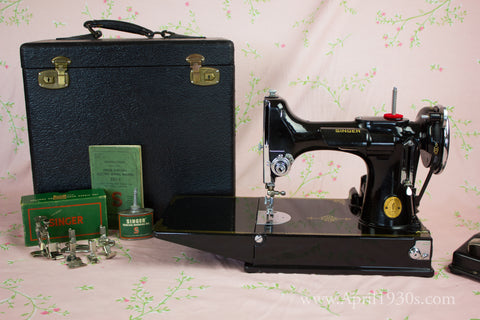
On October 3, 1933, Singer commissioned the first batch of 10,000 model 221 sewing machines, marketing them as the Singer Featherweight.
Experimenting with the design and aesthetics of this new model, some of the distinctions varied, so do not be surprised if you find some subtle changes from machine to machine within this first batch.
The first 200 machines (approximately) had these distinctions:
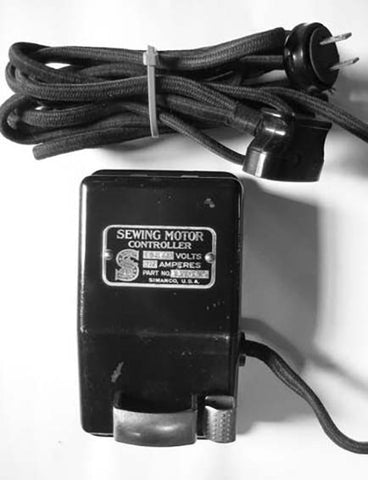
0.6 amp foot controllers
Photo Courtesy of Rob Andre' Stevens

different bobbin case positioning plate bracket (throat plate)
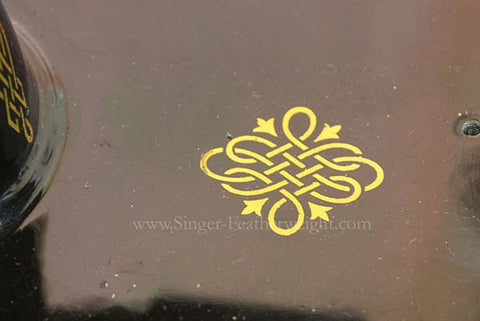
bud decal on the bed of the machine
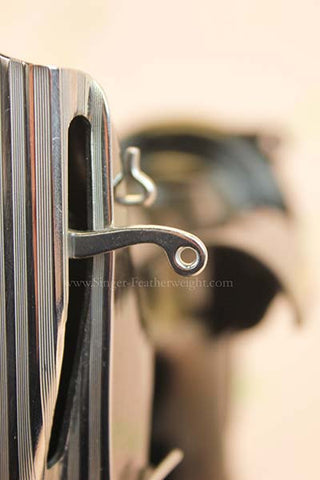
The thread take-up lever had a straighter arm.
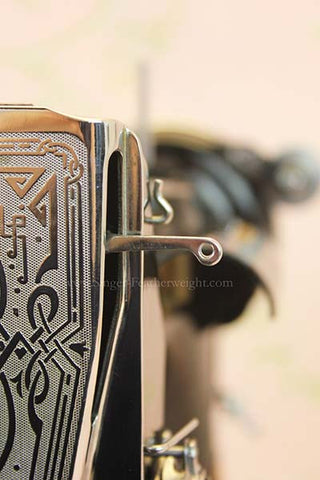
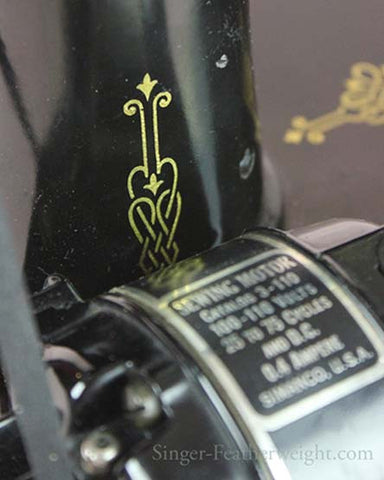
The back arm decal was different in size and design.

The front handwheel decal was incomplete.
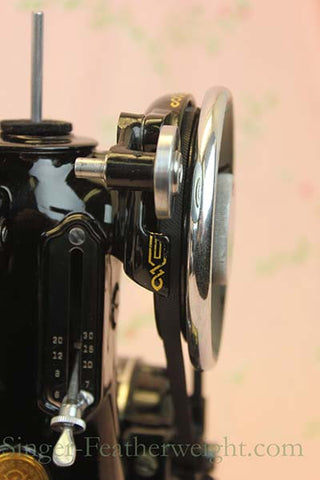
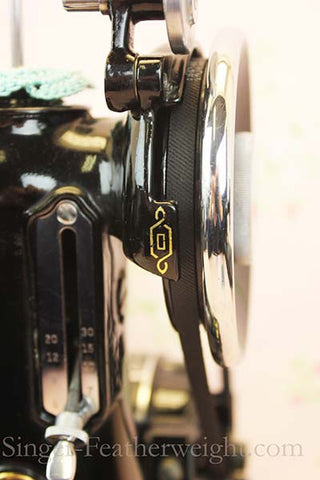
The upper handwheel decal had one additional loop on the end of the decal.
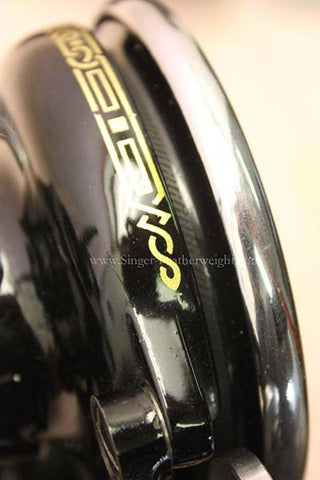
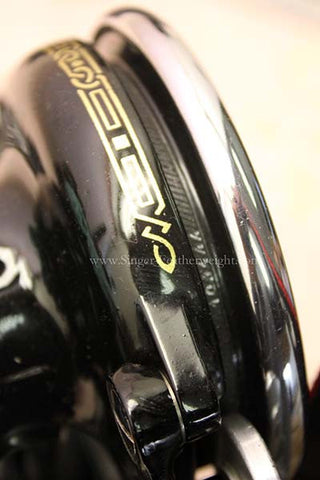
The font lettering was thinner on the "The Singer Manufacturing Co." decal.


After the first 1500 machines (approximately), the bed stop was removed. The bed stop prevented the bed from hitting the thumb screw on the faceplate.
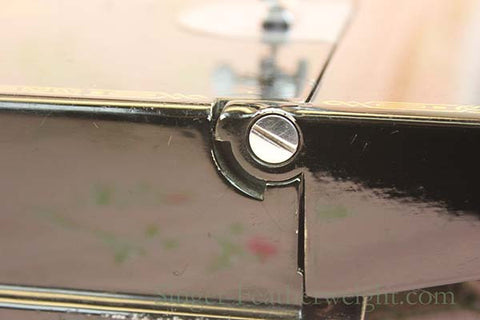
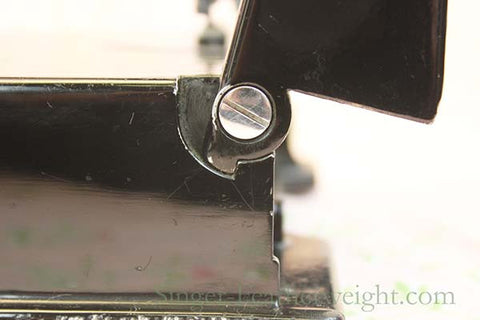
Serial number placement was moved from under the drip pan tray to the bottom exterior so that it could be seen on the bottom end closest to the bed extension without removing the bottom tray. However, the serial number block underneath remained in the mold until 1937.

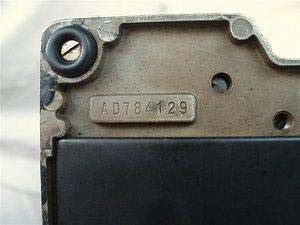
After the first 2000 machines (approximately) the drip pan color changed from silver to the common black.
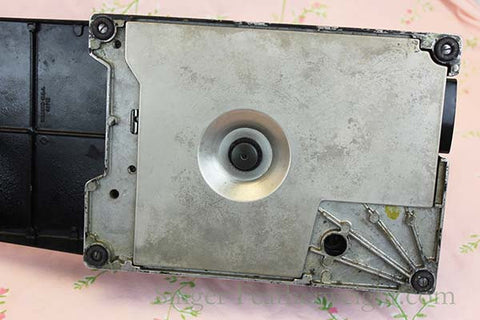
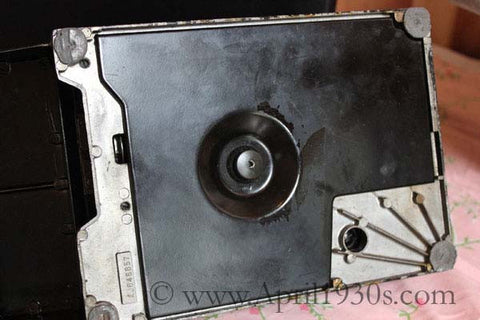
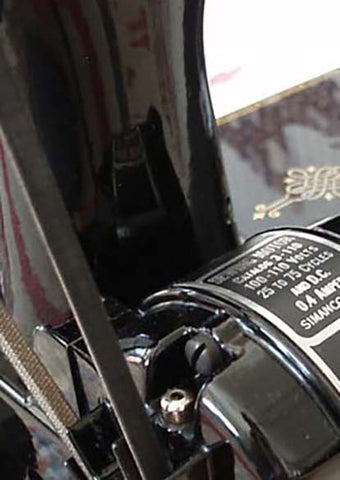
Also after the first 3000 machines (approximately) the arm decal behind the motor is eliminated.
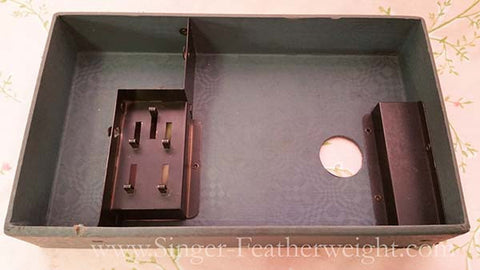
The case changed from Type I to Type II case. It still had the green interior of Type I, but it did not have the bracket to hold down the machine or the hanger for the foot controller.


In late 1933 the hook assembly style changed.
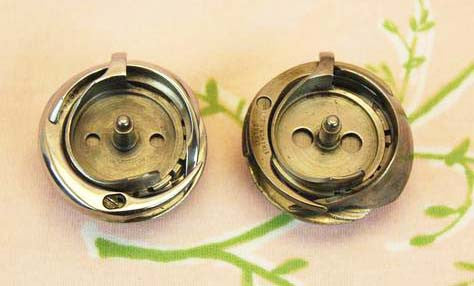
Front

Rear
The Singer Featherweight makes its debut to the public at the Chicago World’s Fair, featuring a specialty badge "Century of Progress Chicago 1934".
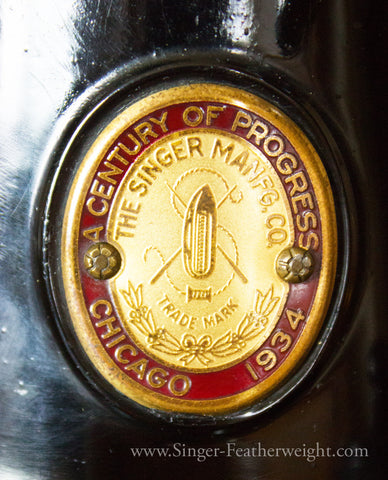
Chicago World’s Fair Badge
Late 1934, the case changed from Type II to Type III, which has D-Ring Case Handle and a black interior. The latches also changed.
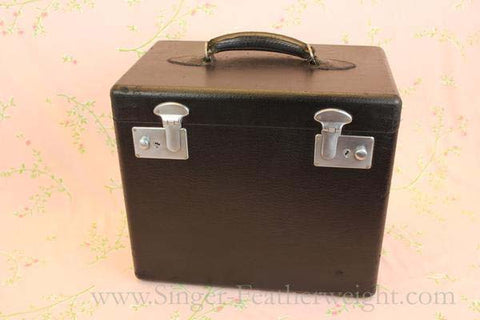
Style 3 Case
Corduroy Case Lid Insert was introduced. It is now referred to as the Type I Case Lid Insert and is the most difficult to find of the two types. You can compare this one with Type II Case Lid Insert which came out in 1939.
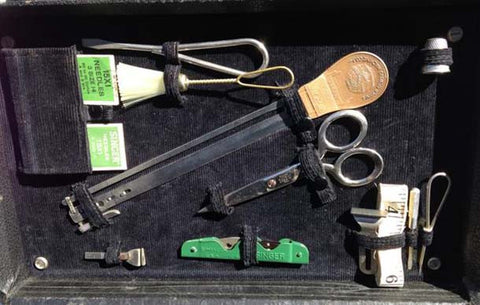
1st Edition Corduroy Insert
Photo Courtesy of Jane Lynch
The needle guide at the bottom of the faceplate was changed from a loop to a slight bend with the thread entering in the opposite direction.

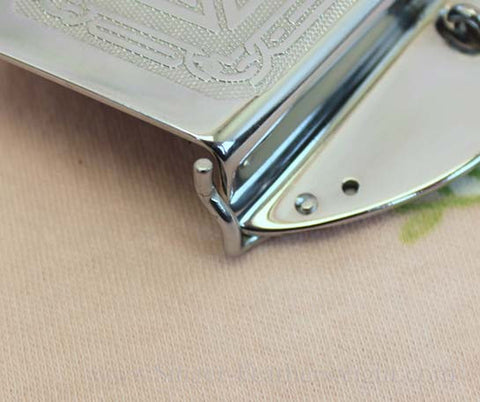
June of 1935, the bobbin winder tension bracket changes from school bell style to a black, flat front mounting style. (This allowed them to use the same base mold.)

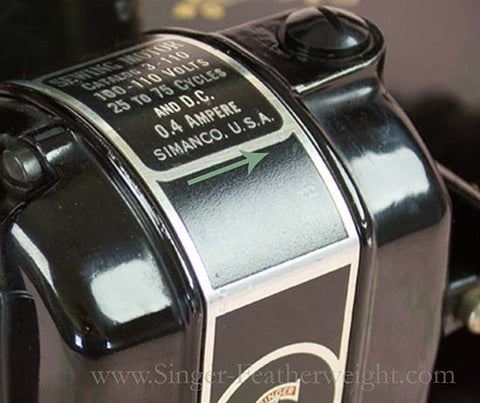
Teeny tiny number references were added to the motor band.

Specialty Badged machine "Texas Centennial Exposition 1836 - 1936" was issued to a select few Featherweight machines and sold at the Texas Centennial Exposition, a World’s Fair commemorating Texas’ independence from Mexico.
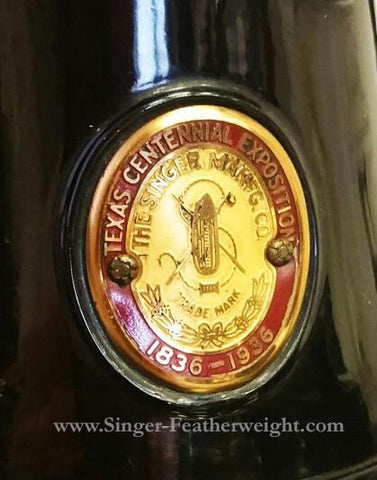
Texas Centennial Badge
In mid-1936, bobbin winder tension bracket was modified and mounted to the top of the base rather than the front side of the machine.

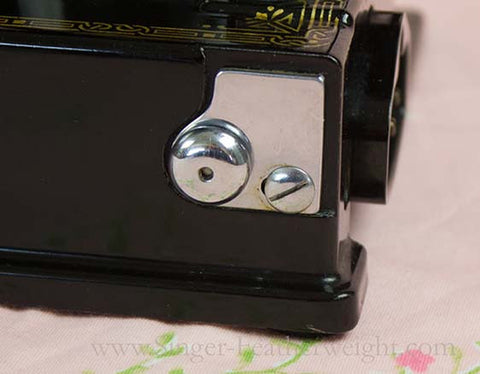
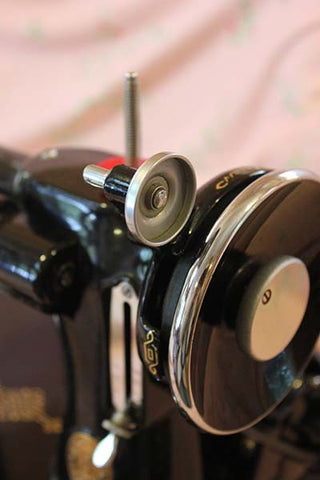
The bobbin winder wheel was changed from being flat (unmarked) to "cupped".

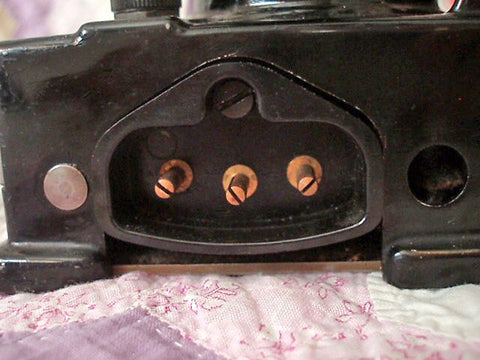
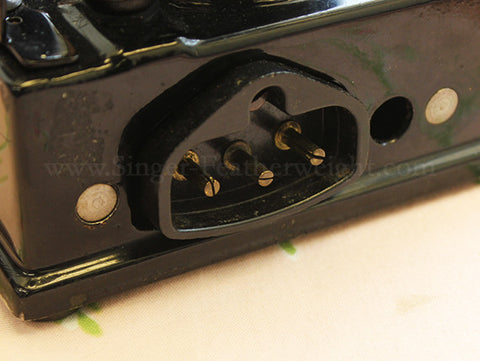
The base mold was modified from being split (aka: "split base") under the electrical terminal to being solid. This kept the terminal more secure and protected.
Foot controller was changed from metal to bakelite (an early type of plastic) with slots on the top.
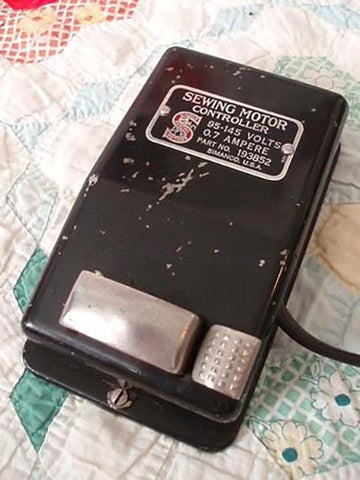
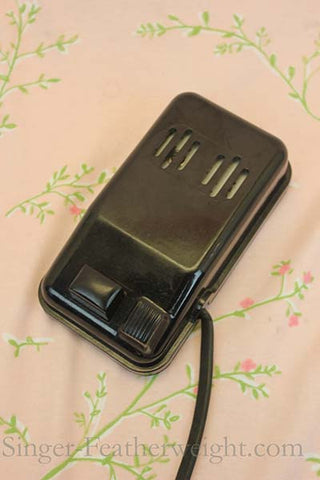
In late 1936, foot controller was changed to a solid bakelite - the most common type found with old Singers today.
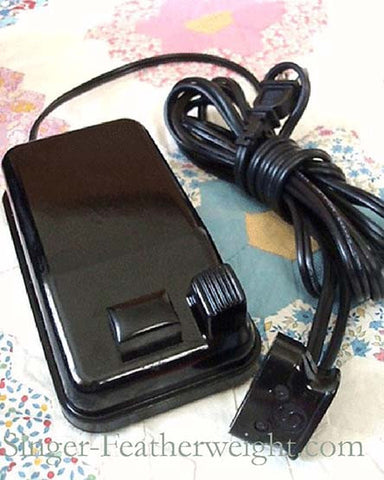
Bakelite Foot Controller
In late-1937 the faceplate changed slightly in the scrollwork design. Along the thread guides, it went from being shiny chrome to having scroll work added to match the rest of the faceplate.
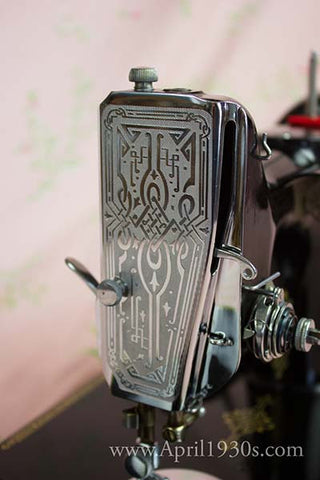

The bed decal that wrapped around the light switch corner was changed to stop at the bobbin winder tension bracket.
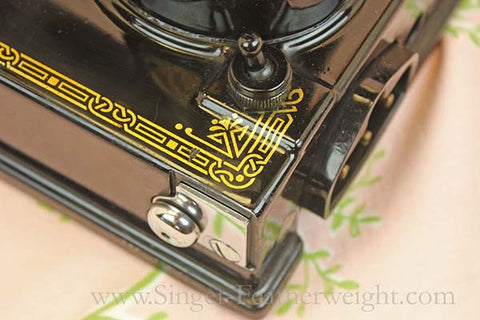
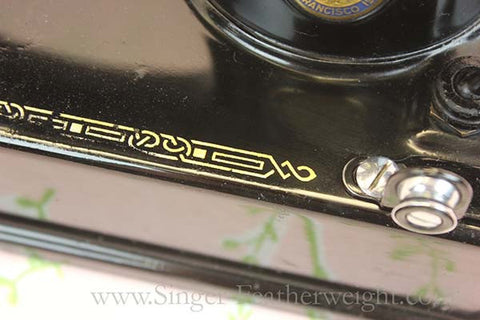
Original 1933 serial number block (inside, under the drip pan tray) was removed from the mold.

Blank Serial Number Block
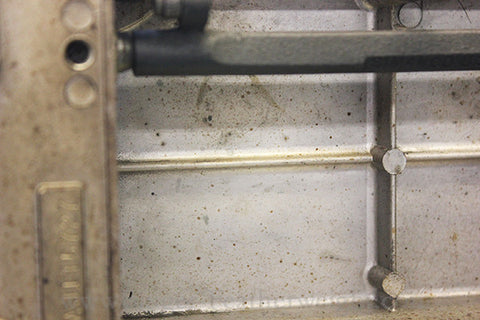
Interior Underside
Late 1937, numbered dial tension units were issued with all Featherweights and continued as standard. This took the guesswork out of tension adjustments.


Specialty Badged machine "Golden Gate Exposition San Francisco 1939" was issued to a select few Featherweight machines and sold at the Exposition’s first year, which commemorated San Francisco’s two new bridges (Bay Bridge and Golden Gate Bridge).
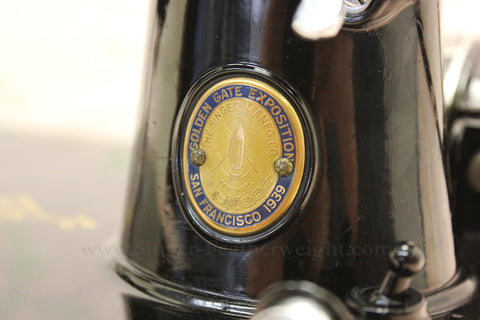
Golden Gate Edition 1939 Badge
Around this era, there were some Featherweights that had the Singer decal on the top of the machine instead of on the light housing. It is not guaranteed that a particular number or set of machines were like this, but most AF38**** serial number Featherweights have the decal placed here, indicating that it was not simply a one-time accidental placement.

Top Decal
Another Corduroy Case Lid insert was introduced. This one is referred to now as Type II. Compare this style with the earlier one from 1935.
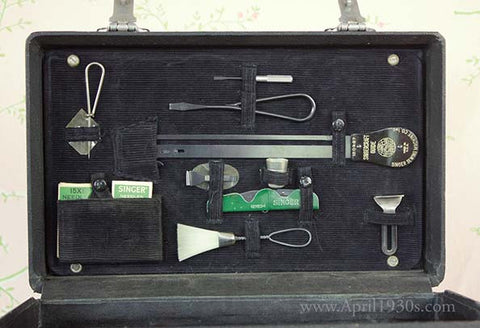
2nd Edition Corduroy Insert
December 1939 - a very small handful of Featherweights were finished with a Wrinkle finish (aka Crinkle), which included the matching wrinkle faceplate.
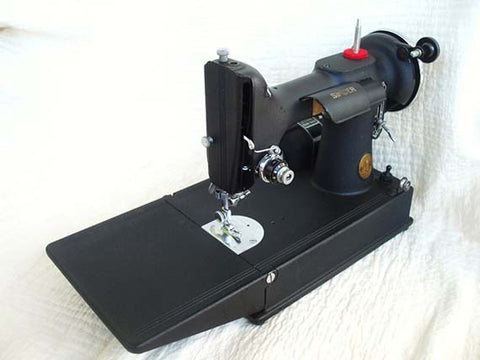
Wrinkle Finish
Specialty Badged machine "Golden Gate Exposition San Francisco 1940" was issued to a select few Featherweight machines and sold at the Exposition’s second year, which commemorated San Francisco’s two new bridges (Bay Bridge and Golden Gate Bridge).

Golden Gate Edition 1940 Badge
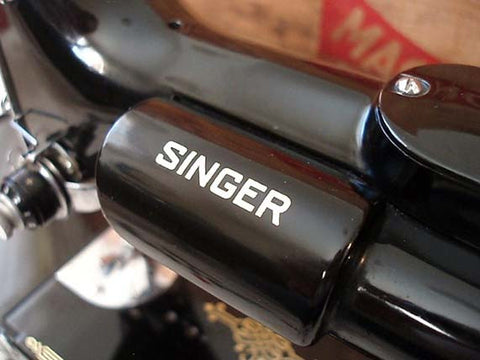
The "SINGER" decal on the light housing was positioned lower and more on the front, and the font remained the same for one batch before being changed to the bolder lettering.


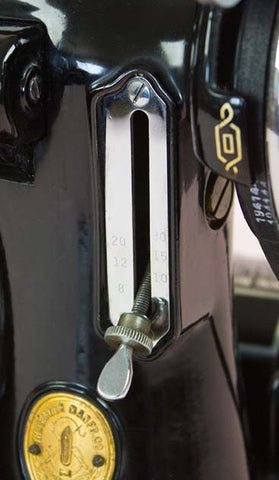
The Stitch length indicator, which had always been chrome plated, was now painted black with silver-colored numbers. The contrast made it a bit easier to read.

August 1940 - a very small handful of Featherweights were finished with a Wrinkle finish (aka Crinkle), however, the Wrinkle Featherweights in this batch were most likely put into storage and not distributed until 1947, when they received the chromed, striated faceplate.

Wrinkle Finish, Later Style
By 1941, the chromed handwheel had been replaced with the solid black, japanned finish.
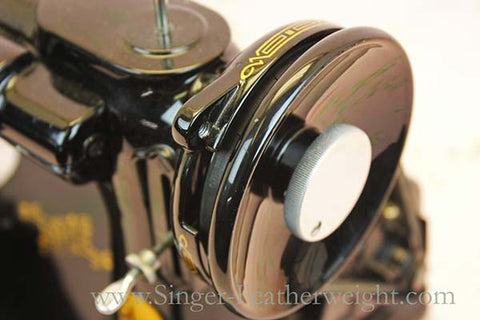
Black Handwheel
July 1941, a handful of machines in this batch are distributed with blackened parts due to the moratorium on chromium for war efforts. The faceplate, presser bar lever, and stitch length indicator are the most notable parts that make the machines in this category distinctive, but even they can sometimes vary. These novelty machines are now known as "Blackside" Featherweights and are a bit elusive. Serial numbers are not consecutive so it is difficult to pinpoint the distribution of various blackened parts.

Blackside Comparison
Foot controllers were changed again from bakelite to metal. The cord came out of the controller from the left side, rather than the right like its earlier version from 1933-1936.
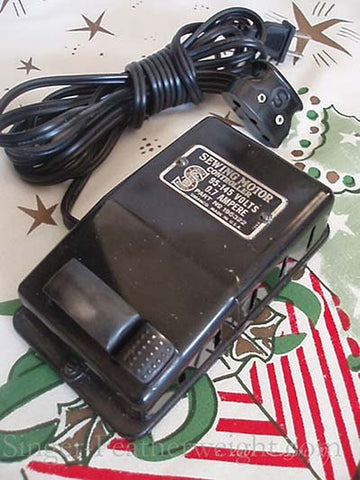
Metal Foot Controller, Late Style
No Featherweights (as well as other family sewing machines) were produced during this time period due to the Limitation Order L-98, which was issued by the War Production Board. The Singer Manufacturing Company was one of many manufacturers ordered by the US Government to convert parts of their factories for war production materials.

War Production Board
September 1945, a second batch of machines included a few "Blackside" Featherweights (like they did in 1941). Again, serial numbers are not consecutive, so it is difficult to pinpoint exact distribution of the various blackened parts.

Blackside
Mid-1946, Singer returned to issuing the solid bakelite foot controllers with all Featherweights.
Bakelite Foot Controller
The modern, sleek-designed striated faceplate is introduced and the scrolled faceplate is no longer issued on the USA made Featherweights.
The scrolled faceplates continued until about 1951 on the Featherweights that were made in the UK.

Striated Faceplate
Type IV Case was issued, which had a C-shaped leather handle and was attached to the lid with pins rather than D-rings.
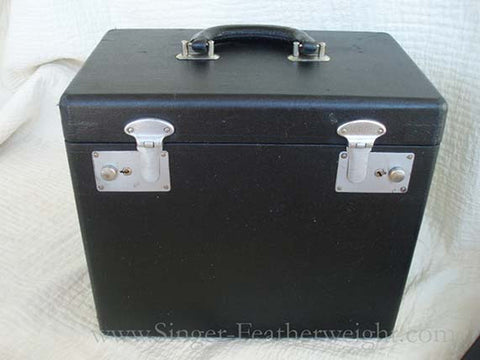
Case Style 4
An "M.R." decal, abbreviated for "Marcas Registrar" began appearing on a few machines. If a Featherweight has this extra decal it will be found under the front oval badge and under the decal on the back arm of the machine. M.R. is the Spanish equivalent to ® or TM in that it was given for exclusive rights to a product, name, slogan, etc. for Latin-American countries, but some machines with this decal never left the USA.

M.R. Decal
Bobbin Winder was changed from the cupped version to the beveled style.
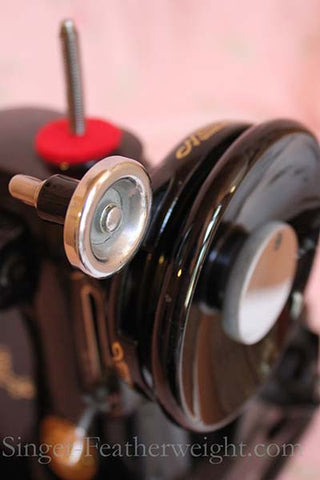
Beveled Bobbin Winder
August 1947, Featherweight production begins in the United Kingdom (Kilbowie, Scotland) at what was then Singer’s largest factory.
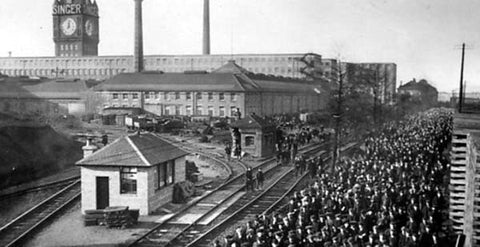
Singer Factory — Kilbowie, Scotland
Specialty Badges "A Century of Sewing Service 1851-1951" were issued to a vast number of Featherweight machines (and other Singer models) to commemorate Singer Manufacturing Company’s 100-year anniversary. Machines were given this specialty badge until 1952. The exact number of these badged Featherweights is not known but it could be 200,000 or more.
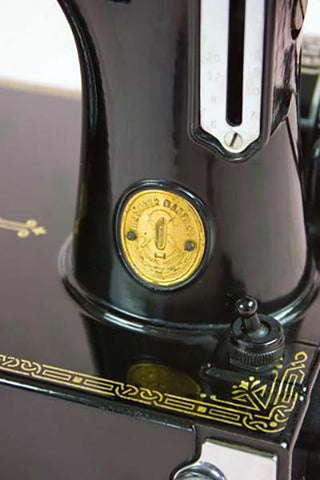
Golden Badge
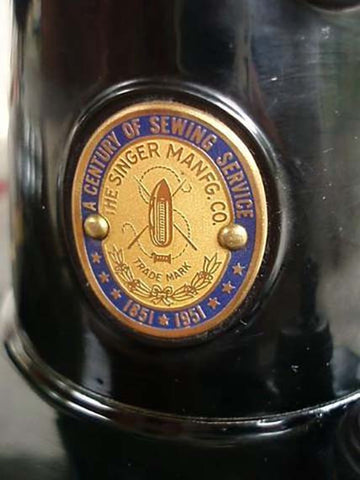
Centennial Decal
Singer changed to a Type V case in the USA. The top tray design of the older cases was removed for a more compact compartment tray on the left side. The lid now held a bracket for the foot controller to slide in and out of easily.
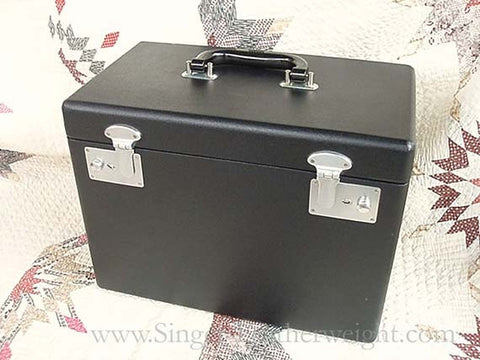
Case Style 5

Top Tray
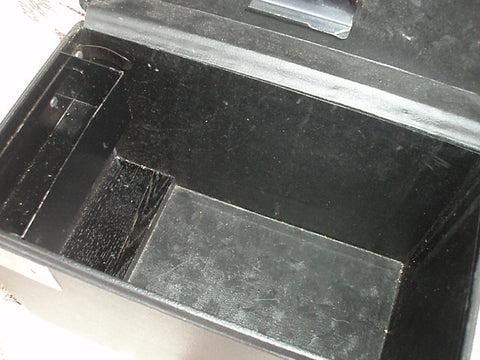
Side Tray
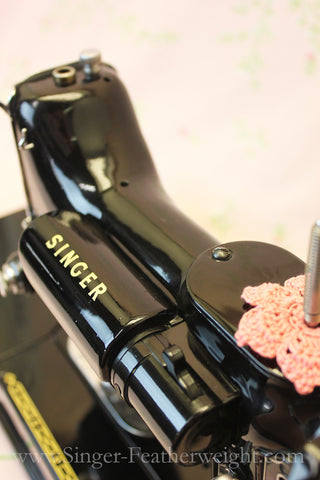
Light switch changed from the bed of the machine to the top of the lamp on 221K machines and continued with this style for the 222K as well.

Graduated Throat Plate replaced the traditional plate which did not have any seam guide markings.

Throat Plate Comparison
The Featherweight badge changed from the centennial series to one with a black ring.

Gold Badge with Black Ring
July 1953, the Singer 222K Free-Arm Featherweight was introduced in the UK, Europe, Australia and some in Canada. This machine was not marketed in the USA. Production of the 222k continued until 1961.

Singer Featherweight 222K
About midway through 1953 Singer added the small "221-" emblem below the main badge.

221- Emblem
Singer changed to a Type VI case for the USA made machines. The case handle was now secured to the lid in conjunction with the foot controller bracket. The clasp style also changed.
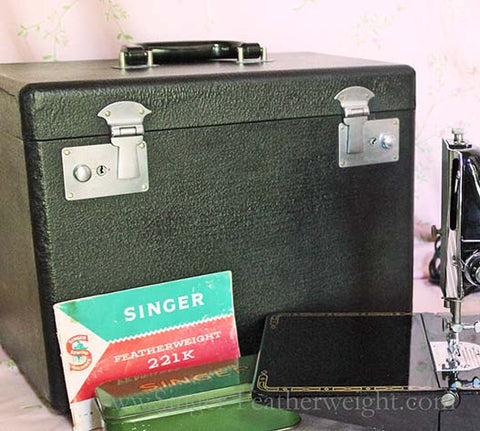
Case Type 6
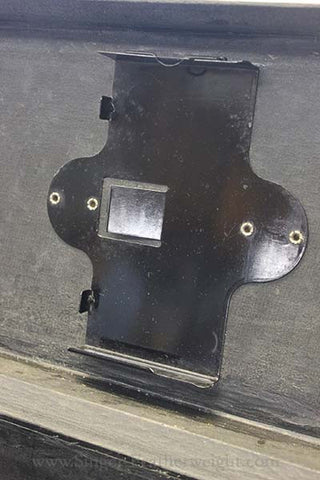
Late Bracket
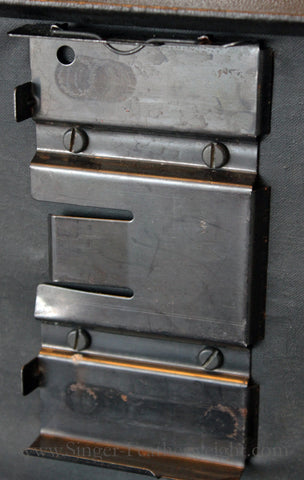
Early Bracket
The classic "Egyptian Scroll" or "Celtic" decals were replaced with what is now referred to as the "Paperclip" or "Prism" design.

Paperclip Decals
Bobbin winder was changed from the beveled to the solid stamped wheel.
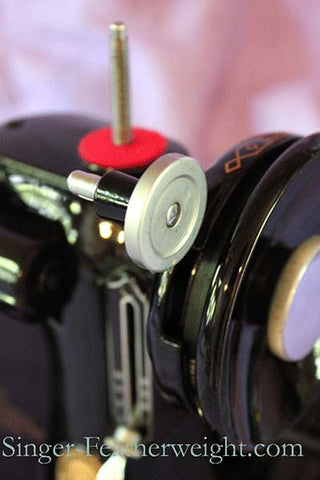
Solid Stamped Bobbin Winder
The manual style changed from the classic vertical green to the horizontal dark blue style but was only seen with some Featherweights. All others had the classic version.

Blue Manual
"Red S" Singer Logo was added to the badge, replacing the traditional vibrating shuttle logo. The "Red S Badge" continued through 1961. These are found on Featherweights made in the UK.

Red S Badge
Production ceased for black Singer Featherweights.
Two new colors of Featherweights were on the scene.
Color #1 — The Tan Featherweight was more like a black Featherweight with the longer bed extension and internal gear driven mechanism. This color Featherweight was manufactured mostly at the St. John’s Factory in Quebec, Canada.

Tan Featherweight 221J
Color #2 — Officially called "Pale Turquoise" and often referred to as "celery green", but more commonly known now as a "White Featherweight". The case was mint green and ivory or light blue and navy. The White Featherweight had many cosmetic differences in addition to an internal belt drive.

White Featherweight 221K